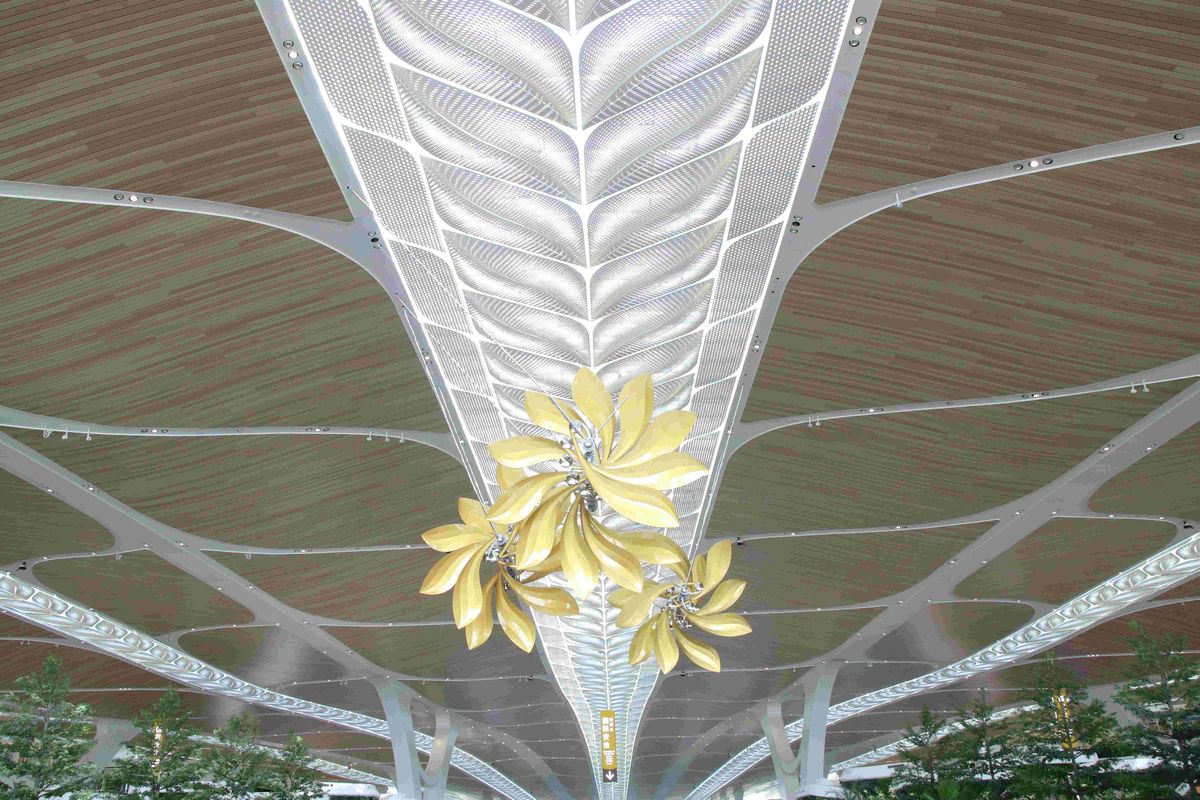
As a key aviation landmark in South China, Guangzhou Baiyun International Airport T3 Terminal has drawn attention for its advanced architectural design. Beyond its grand exterior and functional layout, the terminal's ceiling stands out-thanks to the innovative use of our perforated aluminum panels and wood-grain aluminum panels. These technologies meet the strict demands of a high-traffic airport while adding a blend of modernity and warmth to the space.
1. The Terminal's Ceiling: A Balance of Function and Aesthetics
Baiyun Airport T3 Terminal handles millions of passengers yearly, so every architectural element must balance durability, functionality, and beauty. The ceiling, a key visual feature in public areas like check-in halls and waiting lounges, faced two main challenges: reducing noise buildup in large spaces and avoiding a cold, industrial vibe.
Our perforated and wood-grain panels proved ideal. By combining aluminum's technical advantages with customized craftsmanship, they turned the ceiling from a simple structural part into a design element that fits the terminal's "human-centric" focus.
2. Perforated Panel Technology: Precision for Function
(1) Careful Material Choice
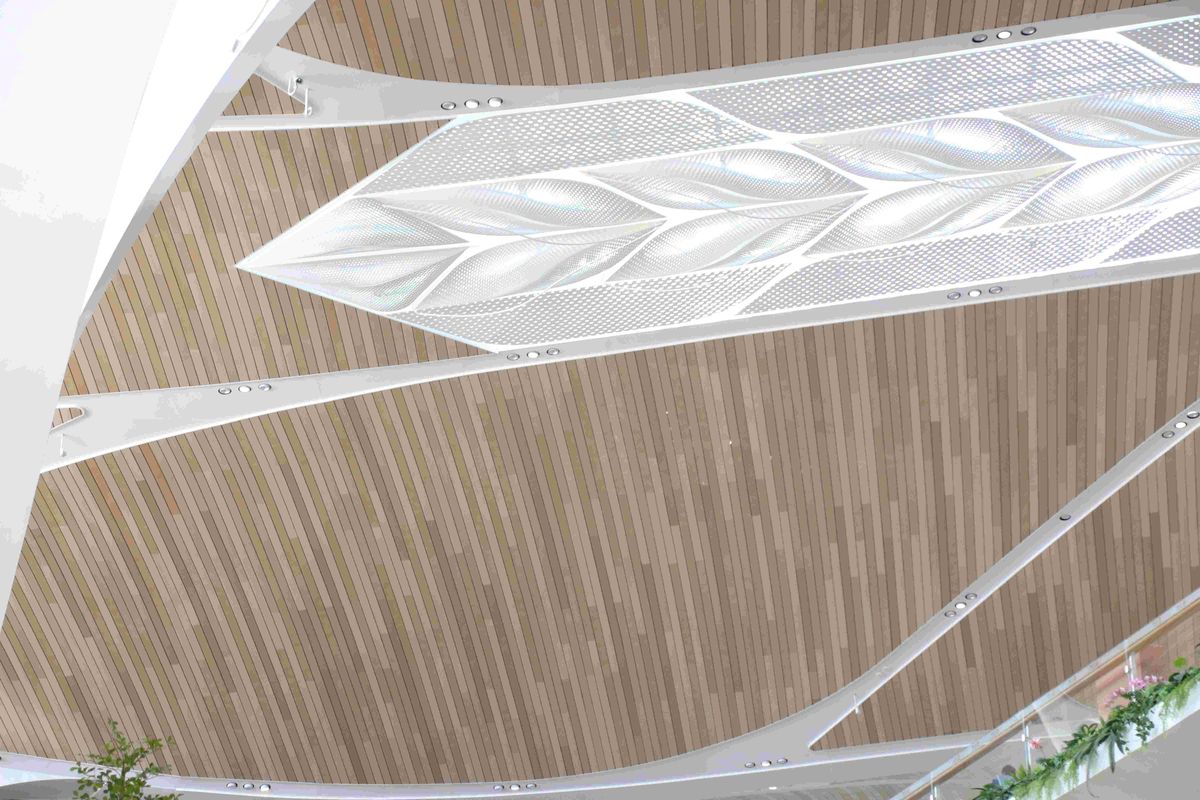
To adapt to the airport's complex environment-including humidity, temperature changes, and heavy use-we selected high-grade aluminum alloy for the perforated panels. This material is lightweight (easing the ceiling's structural load), strong (resisting long-term deformation), and corrosion-resistant (withstanding moisture and pollutants), ensuring long-lasting performance.
(2) Smart Perforation Design
The perforated panels feature various hole shapes (circles, squares) and sizes, tailored to different terminal areas. In noisy check-in halls, a dense, small-hole pattern enhances sound absorption (paired with acoustic materials behind the panels). In waiting lounges, a more spaced-out design creates openness, letting soft light filter through and reducing feelings of crowding.
(3) Strict Installation Steps
Installation followed a precise workflow:
Preparation: We reviewed design drawings with the construction team, checked panels for defects, prepared tools, cleaned the site, and marked positioning lines.
Keel Installation: High-strength steel hangers and keels were fixed to the structure, ensuring stability and evenness.
Panel Fixing: Panels were pre-arranged on the ground for consistency, then attached to keels with anti-rust screws (with small gaps for thermal expansion). We coordinated with teams installing lighting and sprinklers to avoid functional issues.
Finishing: Aluminum trim strips hid edges, and the ceiling was cleaned to remove dust and fingerprints.
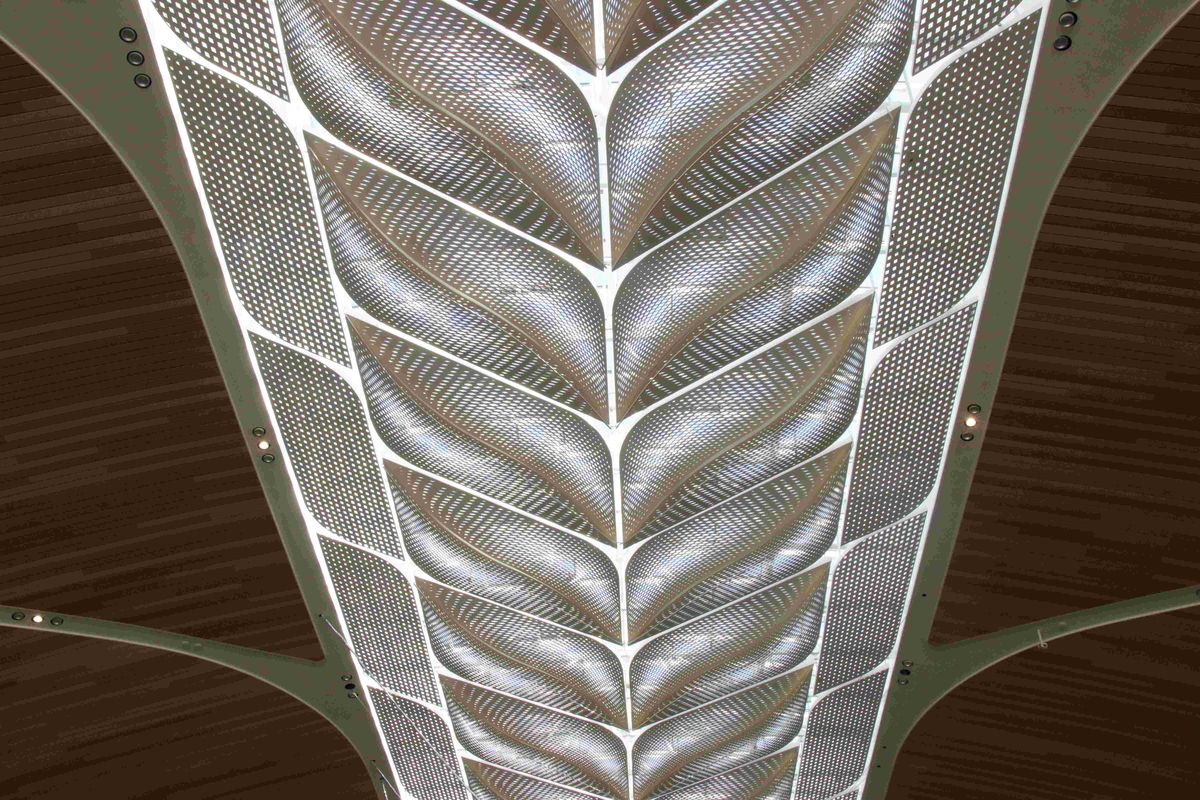
The successful use of perforated and wood-grain panels in Baiyun Airport T3 Terminal's ceiling shows how specialized aluminum technologies can elevate large public buildings. By balancing function, aesthetics, and sustainability, these panels set a standard for airport design.
At Ballesta®, we remain committed to innovating aluminum craftsmanship, helping turn creative architectural visions into practical, long-lasting spaces. For Baiyun Airport T3 Terminal, the ceiling is more than a covering-it's a way to enhance the passenger experience, one panel at a time.
Ready to Specify Ballesta Metal Products?
Get expert advice on product selection and custom solutions for your project.