Servicio Técnico de Arquitectura - Descargar Catálogo - Contáctenos
Inicio
Productos
Soluciones
Acabados
Proyectos
Recursos
Info
Video Acerca de

Spray Painting

Liquid paint application using advanced spray equipment — offering unmatched flexibility for complex geometries, small-batch runs and custom color matching with professional-grade results.

Descripción General

What Is Spray Painting?

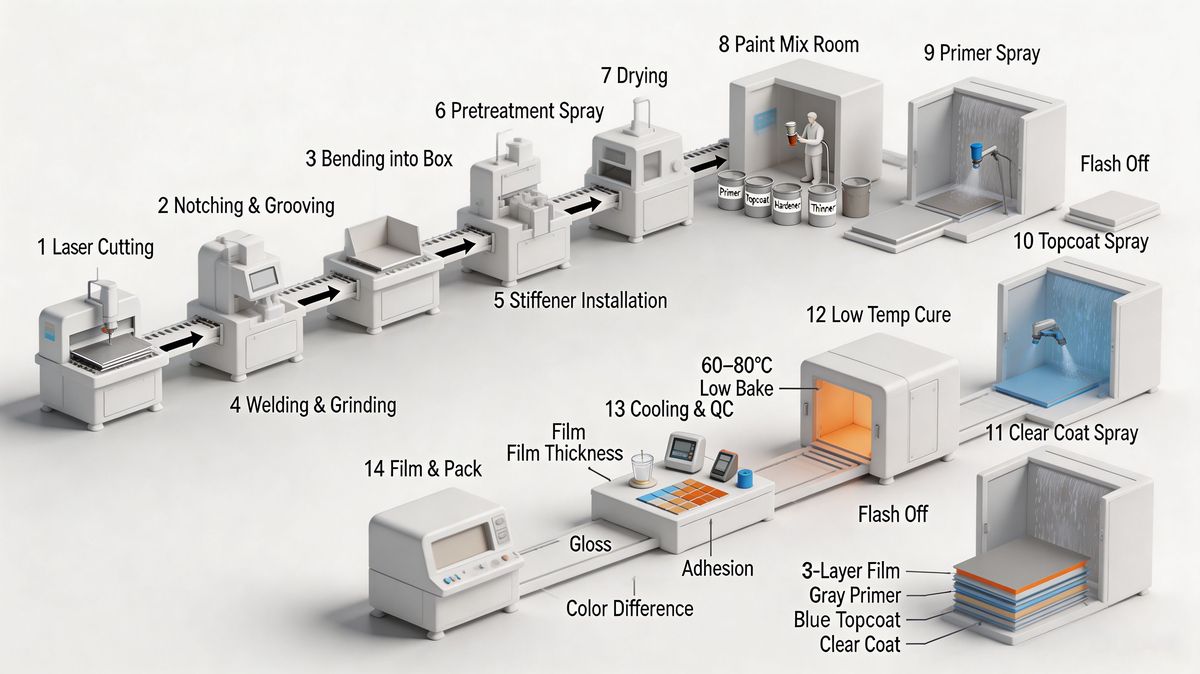
Spray Painting Process

Spray painting is a liquid coating application method where paint is atomized through a spray nozzle and deposited onto the aluminum surface. Unlike coil coating or powder coating, spray painting can cover complex three-dimensional shapes, assembled products and surfaces that cannot be processed on a continuous line.

Ballesta works with established finishing partners whose spray painting facilities feature dedicated spray booths with controlled temperature and humidity environments. Through these partners, certified applicators can work with PVDF fluorocarbon paint, polyester paint, polyurethane and specialty coatings. The process includes surface pre-treatment, primer application, color coat application and controlled oven curing.

Spray painting is the preferred method for projects requiring custom colors in small quantities, restoration work where existing finishes must be matched, and architectural elements with complex geometries such as curved panels, louvers with tight profiles, and custom fabrications with deep recesses.

Spray vs Powder

Spray Painting vs Powder Coating

Understanding the differences between spray painting and powder coating helps select the right finish for each project:

FactorSpray PaintingPowder Coating
Coating Thickness25-60 µm (total)60-120 µm (single coat)
Complex ShapesExcellent — reaches all areasLimited by Faraday cage effect
Color RangeUnlimited, including special effectsVery wide, but limited effects
VOC ContentPresent (solvent-based paints)Zero VOCs
Batch Size FlexibilityExcellent — small batches OKBetter for medium to large runs
Repair & ReworkEasier touch-up and repairDifficult to spot-repair
Técnicas Specs

Spray Painting Especificaciones

ParameterSpecification
Paint TypesPVDF (Fluorocarbon), Polyester, Polyurethane, Acrylic
Dry Film Thickness25 – 60 µm (primer + top coat)
Maximum Part Size6,000 mm (L) x 2,000 mm (W) x 1,000 mm (H)
Gloss Level5% – 95% (60° gloss meter)
Color RangeRAL, Pantone, NCS, custom & metallic
Pre-treatmentAlkaline degrease + conversion coating (chromate or chrome-free)
CuringForced air oven, 120°C – 200°C
Adhesion100/100 cross-cut (ASTM D3359)
Salt Spray500+ hours (ASTM B117)
Key Advantages

Por Qué Elegir Spray Painting

Complex Shape Coverage

Unlike powder coating where the Faraday cage effect can leave recessed areas uncoated, liquid spray paint reaches every surface, edge and crevice of complex 3D shapes.

Small Batch Flexibility

No minimum order quantities for most standard colors. Ideal for custom projects, prototypes, architectural restoration and small-scale architectural elements.

Premium Finish Quality

Skilled applicators and controlled booth conditions deliver a smooth, defect-free finish that meets AAMA 2605 standards for exterior architectural coatings.

Special Effects

Metallic flake, pearlescent, translucent, textured and custom effect finishes that are difficult or impossible to achieve with powder coating or coil methods.

Repair Capability

Damaged or mismatched finishes can be spot-repaired by re-spraying the affected area without requiring full stripping and recoating of the entire panel.

Custom Color Matching

Our partners' color laboratory can match virtually any color sample — from existing building panels to designer color swatches — with spectrophotometer-verified accuracy.

Aplicaciones

Typical Aplicaciones

  • Custom Curved Panels: Spray painting is the only practical finish for 3D-formed architectural panels
  • Fabricated Assemblies: Pre-assembled products where the coating must cover welds, joints and all surfaces
  • Architectural Restoration: Matching original finishes on historic building renovation projects
  • Prototype & Sample Production: Quick color samples and mock-ups for client approval
  • Interior Feature Elements: Decorative screens, art panels and custom architectural features
  • Special Effect Finishes: Projects requiring metallic, pearlescent or custom textured surface effects
Color Reference

RAL & Pantone Color Tool

Browse popular architectural colors, search by RAL or Pantone code, and find the cross-reference between color systems. Click any color to view details.

Warm
Cool
Neutral

Need a specific RAL or custom color for your project? Contáctenos for a color match.

Request Color Match
FAQ

Frequently Asked Questions

What is the difference between spray painting and coil coating?

Spray painting applies liquid paint using spray guns, allowing coverage of complex 3D shapes and assembled products. Coil coating applies paint to flat aluminum coil before fabrication via roller application. Spray painting offers more flexibility for small batches and intricate shapes, while coil coating is more efficient for large, flat surfaces.

Can Ballesta supply spray-applied PVDF coating?

Yes. Through our finishing partners, Ballesta supplies spray-applied liquid PVDF fluorocarbon paint for exterior-grade applications. The process involves primer application, oven flash, color coat application and final curing in temperature-controlled drying ovens.

What is the coating thickness for spray painting?

Spray-applied liquid paint typically achieves 25-60 microns total dry film thickness (primer + top coat). This is thinner than powder coating (60-120 microns) but allows for a wider range of special effect finishes including metallics, pearls and transparent colors.

Is spray painting suitable for small-batch production?

Yes. Spray painting is the most flexible finishing method for small to medium batch sizes. There are no minimum order requirements for most standard colors, making it ideal for prototypes, custom projects and architectural restoration work.

How does the VOC content of spray painting compare to other methods?

Unlike powder coating which contains zero VOCs, solvent-based spray paints do contain volatile organic compounds. However, through our finishing partners, high-solid, low-VOC formulations are used where possible, and all booths are equipped with proper ventilation and exhaust treatment systems to meet environmental compliance standards. Water-based spray paints are also available for interior applications, reducing VOC content significantly.

What surface preparation is required before spray painting aluminum?

Proper surface preparation is critical for adhesion. The standard process includes alkaline degreasing to remove oils and contaminants, followed by a conversion coating (chromate or chrome-free) that creates a chemical bond layer on the aluminum surface. For exterior-grade applications, a primer coat is always applied before the color coat. This multi-step preparation ensures the coating passes 100/100 cross-cut adhesion tests.

Looking for Products with Spray-Painted Finish?

Tell us what product you need — custom-shaped panels, complex profiles or architectural metalwork — and your color/specification requirements. We'll recommend the right paint system and provide a quotation within 24 hours.

Inquire About Spray-Painted Products